Senin, 10 Juni 2013

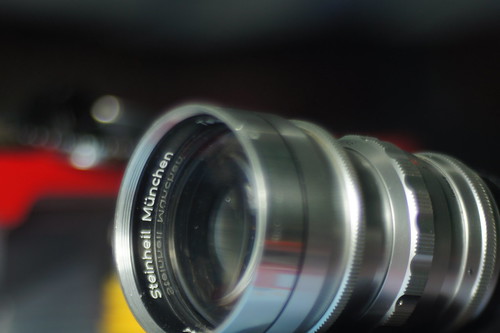
Steinheil Munchen Tele Quinar 135/3,5 M39


This lens is for SLR M39, not M39 aka LTM rangefinder. But it has short register as SLR one. I guess it's for Braun paxette M39 SLR. It's tiny and has MFD 3 meters, too long for common SLR, remind me of Voigtlander super dynarex which has 4 meters MFD.
In My Sony NEX I use extension tube + LTM-NEX adapter to reach infinity. I really like it's compact size and beautiful silver/chrome finish. Everyone will watching it :D
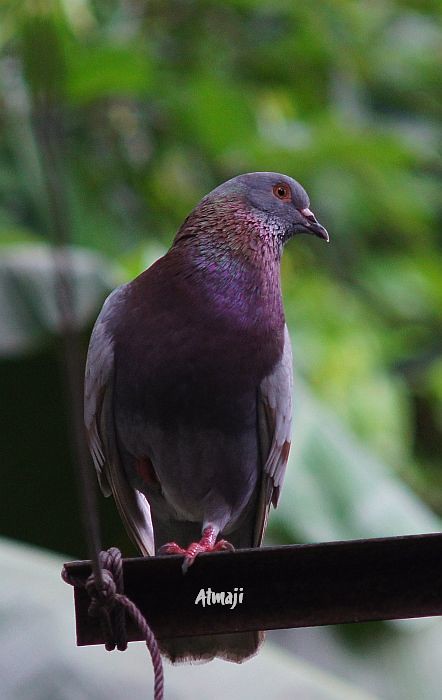
There's one thing that I like about results with this lens, I can see 3D in most of results than other lens, specially 135mm lens.
 shots at wide open aperture except last one

ISO 400 or 800


Volna 3, 80/2,8 Pentacon 6 mount


The lens has light fungus, it's heavier, fatter and bulky than Vega 90/2,8
All pictures in wideopen  aperture
The first 4 shot at ISO 800. indoor.


Selasa, 04 Juni 2013

Kaleinar-5N or Калейнар-5Н 100/2.8 MC

lens design from http://allphotolenses.com

This lens has good reputation, it always compared to Nikon 100/2,8 E series.


Minimum focus distance is marked 0,8m, here's sample at closest focus

cropped

Rabu, 15 Mei 2013

Sonnar 4cm/2 from Zeiss Ikon Tenax


I got only optical block of this lens. There're blades inside, but no aperture ring outside.

Here's description about the camera from wikipedia.

During the 1930s, Zeiss Ikon (ZI) made a wide range of miniature cameras for the 35mmfilm format. Most cameras used the standard 24×36mm frame size, like the Contax,Nettax and Super Nettel. However, the ability to take images in fast sequence was a popular marketing element at the time, and several fast-operating models were made. Among these were the Robot cameras as well as the Zeiss Ikon Tenax I and II. These have the smaller square format of 24×24mm, enabling faster film advance, either manually or motor-driven.[1]
The Tenax II is a 35mm RF-camera launched by ZI in 1938. It produces 50 square exposures on a standard length of 35mm film. It has a Compur Rapid shutter, situated just behind the lens, with speeds from 1 to 1/500 second. The camera is wound and the film advanced simultaneously depressing the large lever on the right-hand side of the lens. At first it was only called the Tenax, but the following year a quite different and less sophisticated camera with the same name was launched, both designed by Otto Berning. The 1938 model is known as mark II, or just the Tenax II, while the simpler 1939 model, is known as the Tenax I.[2] The "Tenax" name belonged to the C. P. Goerz company in Berlin, being used from 1907 on folding plate cameras and a Vest-pocket camera from 1909. C. P. Goerz became a part of Zeiss Ikon at its formation in 1926. The name was used again by ZI in the 1960s. The Tenax I was continued for a while in the 1950s in East Germany.[3] 
The Tenax II has a proprietary bayonet lens mount as a provision for using different lenses, but only a small selection was made available during the few years the camera stayed in production. A small round window in a lateral extension on the lens barrel is aligned up in front of the camera's right-hand rangefinder window. 
It contains a pair of contra-rotating glass wedges synchronised with the lens focusing lever that provides accurate focusing by aligning the upper and lower subject section in the viewfinder.[4]
STANDARD LENSES:
  • Carl Zeiss Jena Tessar 1:2,8 f=4 cm [5]
  • Carl Zeiss Jena Sonnar 1:2 f=4 cm


I attached it in my contax RF/Kiev - Nex adapter, works nicely.plus I can make it closer MFD, so close focus shots here like using extension tubes.


    I got CZ Sonnar 50/2 LTM version, but optic is hazed so bad. So I took off the optic block, then put this 4cm/2 optic block in it. works nicely. 


    Pictures updated, since link from mflenses.com doesn't work anymore.

    Minggu, 28 April 2013

    Schneider Kreuznach Xenoplan 35/1.9 Industrial lens Cmount


    Engineered for industrial inspection and measurement applications, the Schneider 21-1001960 lens features a compact and rugged design and is appropriate for use in crash tests, robot vision or similarly high impact applications. Maximum light transmission and image sharpness is achieved using a special broadband optical coating system while a finely threaded ring provides precise focusing operation.

    Designed for 2/3" Cameras
    This lens is compatible with 2/3" and 1/2" CCD, CCTV cameras.
    Compact & Rugged
    With its compact and rugged design, this lens is appropriate for use in crash tests, robot vision and similarly harsh environments.

    Broadband Coating
    A broadband coating on the lens ensures maximum light transmission in lighting environments ranging from the visible to the near infrared.
    Precise Focus
    A fine thread ring offers precise focusing adjustments.
    Ring Lock
    A screw-lock system prevents focus and iris, ring shift on vibrating equipment.

    Official specification of the lens

    Imager Size2/3"
    MountC
    Focal Length35mm
    ApertureF1.9
    Focus OperationManual with lock
    Iris OperationManual with lock
    Magnification RangeInfinity - 7.0
    Minimum Object Distance (M.O.D.)Infinity - 246mm
    Dimensions (HxD)1.2 x 1.4"
    31.5 x 35.9mm
    Weight3.2 oz
    92 g


    Manufacturer resource  www.schneiderkreuznach.com

    Like other common C mount lenses, sharp only at center of frame. swirly bokeh, and small.

    Shot with Olympus EPM1, it has vignette on m4/3


    with flash from right side


    Sample with Olympus EPL1,
    Shot with EPL1, @F4

    Kamis, 18 April 2013

    Zeiss Opton 50/1,5 Contax RF mount


    Contax Range Finder mount (It's also called Kiev RF or Nikon RF) has some nice lenses, but it's not popular due high priced adapter to mirrorless cam. some lenses have no focusing helicoid, this 50/1,5 West Germany made too. I got an adapter made from used Kiev camera.
    left is adapter made from Kiev camera


    Opton means this was made in West Germany. while their counterpart was Jena from East Germany.
    Like many other old lenses, this lens has low contrast character.good for B/W results.


    From rangefinder.com I found interesting information. This was posted by member ZeissFan
    Briefly, the breakdown of the Carl Zeiss lenses is this:

    1) Carl Zeiss Jena (no red "T"): Prewar uncoated lenses in a heavy chrome mount. Some lenses near the end of World War II were coated and a few are in lightweight alloy. And some prewar lenses were coated by a third party, but these lenses in general will not have any designation on the lens ring. The earliest lenses for the Contax I are in nickel and black mounts -- very handsome and somewhat expensive. Remember, it was the Zeiss lenses that were the key component of the Contax system. Zeiss had an outstanding, sharp f/1.5 lens (Sonnar) well before Leica had a comparable offering.

    2) Carl Zeiss Jena "T": For the most part, these are East German lenses and are in lightweight alloy mount. You can feel the weight difference between the East German optic and their West German counterparts.

    3) Zeiss-Opton "T": Coated West German lenses in a heavy chrome and steel mount.

    4) Carl Zeiss (no "T"): Zeiss dropped the "T" with these final series of coated lenses. Again, a heavy chrome and steel mount.


    So Mine is number 3 version. It's heavy chrome and steel.
    Color tone remind me of old print in years ago before digital age. take a look at this one
    F8


    wideopen shots..


    Rabu, 17 April 2013

    гелиос or Helios 103, 53/1,8 Kiev/Contax RF mount

    гелиос 53/1,8 only made for Kiev RF. so no other version.
    lens


    I really like this OOF blended perfectly with mirror

    wideopen, closest focus
    cropped 100% from above

    Entri yang Diunggulkan

    Prambanan from above

    Samyang 12/2 Steinheil Munchen 135/3,5   Yashica ML 55/1,2 Steinheil Munchen 135/3,5 Minolta 500/8 Rokkor